
Surf Etiquette Rules: Respecting the Ocean and Other Surfers
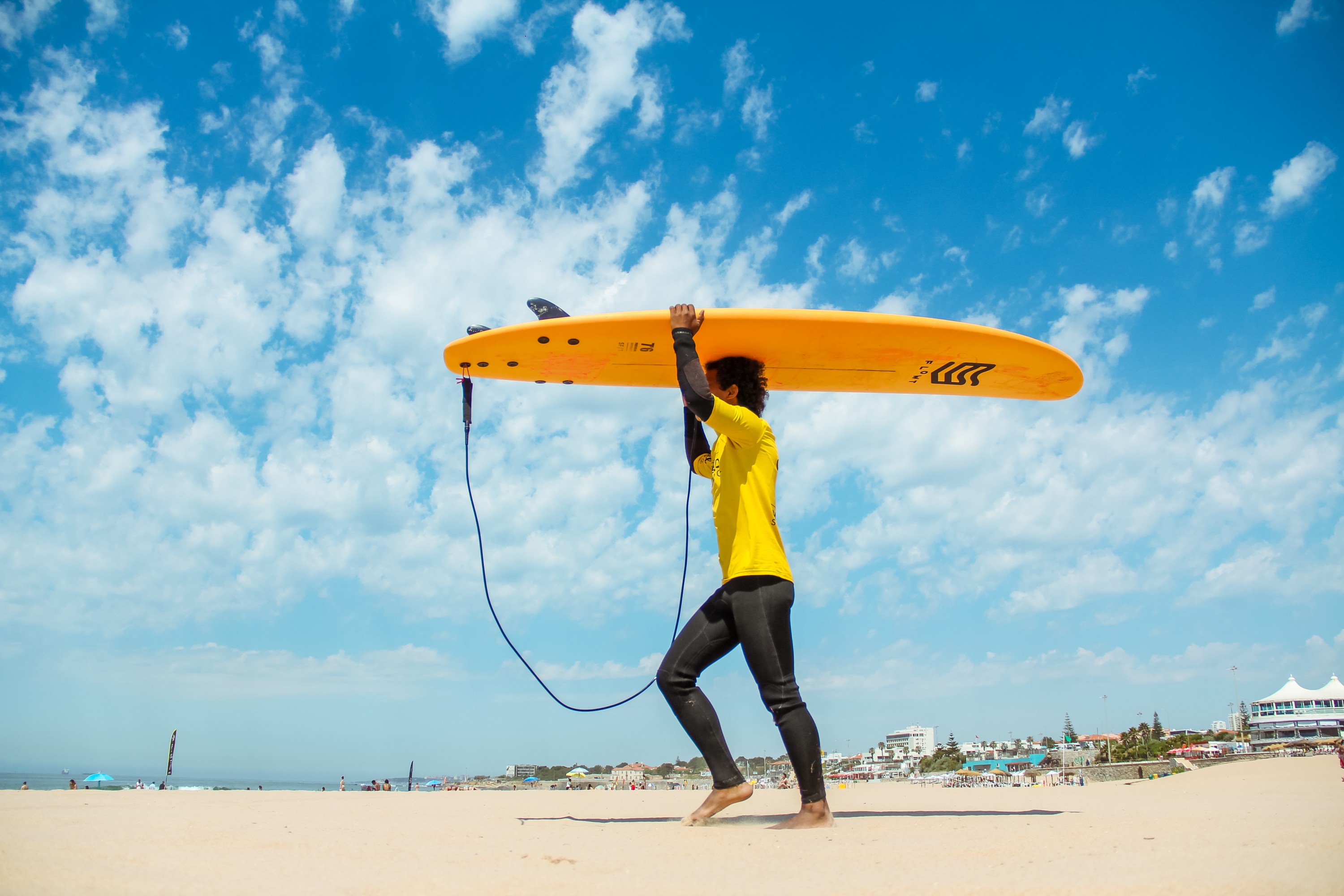
Surfing is much more than just riding waves. It’s a sport deeply rooted in respect — for the ocean, for other people, and for local surf culture. In places like Carcavelos, where surfing has been part of the beach’s identity for decades, surf etiquette is especially important.
Carcavelos has a long-standing surf culture and wave conditions that attract everyone from complete beginners to experienced surfers, particularly in winter, when powerful and sometimes tubular waves appear. At the same time, it’s a very touristic beach, with several surf schools and many visitors surfing for the first time.
All of this means the line-up can get crowded — sometimes very crowded. Knowing how to behave in the water isn’t just about good manners; it’s about safety and coexistence.
Respect starts before you enter the water
Good etiquette begins on the beach.
- Watch the ocean for a few minutes
- Notice where the peaks are and how surfers are entering and exiting the water
- Avoid paddling straight into an already well-organized group
In Carcavelos, it’s common to see surf lesson areas alongside zones with more experienced surfers. Whenever possible, choose the spot that best matches your level.
Priority: the most important rule in surfing
The golden rule of surfing is simple: The surfer closest to the peak, who stands up first, has priority.
Never drop in on someone:
- If they are already riding the wave, stay out of their way
- Don’t paddle into their line
- Don’t try to take the same wave if you don’t have priority
On crowded days — very common in Carcavelos when it’s the only beach on the Cascais line with good waves — respecting priority rules helps avoid accidents and conflicts.
Don’t “snake” the line-up
“Snaking” is when a surfer repeatedly paddles around others to steal priority. It’s one of the most frowned-upon behaviors in surfing, especially in spots with a strong local presence.
Even though Carcavelos is an open and welcoming beach, there are regular local surfers who know the peaks, currents, and seabed well. Showing respect means waiting your turn, not constantly paddling to the front and understanding that everyone is there to surf.
If you “steal” a wave from a local surfer, there is a good chance that you will find yourself in a very unpleasant confrontation.
Extra care if you’re learning to surf
If you’re a beginner — which is very common in Carcavelos — etiquette is even more important.
Essential rules include:
- Keep a safe distance from more experienced surfers
- Avoid critical or hollow peaks during winter
- Never let go of your board
- Always follow your instructor’s instructions
Surf schools play an important role in organizing space in the water, but students also need to be aware of their impact on the line-up.
During the winter in carcavelos is not recommended to learn alone, especially due to the amount of surfers who are often in the water at the same time. It is always safer to start under the guidance of an instructor.
Learn how to paddle out correctly
A common mistake is paddling straight through the take-off zone.
Whenever possible:
- Use the channel
- Paddle around the peak
- Go behind the breaking waves
This is especially important in Carcavelos, where many waves are fast, increasing the risk of collisions.
Communication prevents problems
Simple gestures go a long way:
- Eye contact signaling you’re going to catch the wave
- Apologizing if you make a mistake
- A “go for it” or “nice wave”
Surfing doesn’t need to be aggressive. Good communication helps create a positive atmosphere, even on crowded days.
Winter in Carcavelos: maximum respect required
During winter, Carcavelos changes. Waves become stronger, cleaner, and sometimes hollow. This attracts more experienced surfers from many different areas.
On these days:
- Be honest about your skill level
- Don’t paddle out just because it “looks good”
- Give space to surfers who clearly have control and experience
Respect here is also about respecting your own safety. If you are not a very experienced surfer, leave the more challenging days for those who have a higher surfing level. In carcavelos the conditions change a lot so you will always have days of surfing suitable to your level too.
Conclusion: Sharing waves means sharing the experience
Carcavelos’ surf has everything: history, tourism, localism and conditions for all levels. That mix is exactly what makes it special — and challenging.
Following surf etiquette rules helps to prevent accidents, create a friendlier atmosphere, respect local surf culture and, of course, ensure everyone has a good time
Whether it’s your first lesson or a challenging winter session, remember: a true surfer is someone who respects the ocean and everyone in it 🌊🏄 ♂️